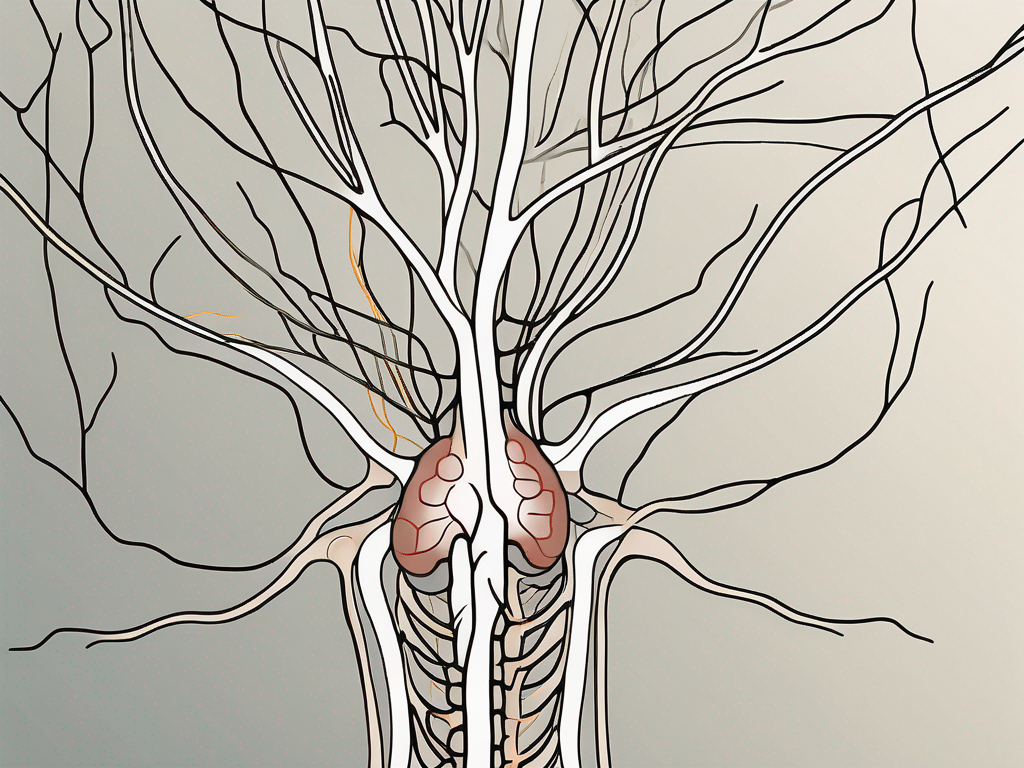
The great auricular nerve is an important nerve in the neck region, but which cervical nerve does it actually branch from? To understand the answer to this question, it is essential to delve into the intricacies of the anatomy and function of this nerve.
Understanding the Anatomy of the Great Auricular Nerve
The great auricular nerve is a fascinating structure that plays a crucial role in the sensory innervation of the ear and neck. Let’s delve deeper into its origin, pathway, function, and clinical significance.
Origin and Pathway of the Great Auricular Nerve
The great auricular nerve derives its origin from the cervical plexus, specifically from the spinal nerves C2 and C3. This complex network of nerves supplies various regions of the head and neck with sensory and motor innervation. Emerging from the posterior border of the sternocleidomastoid muscle, around the level of the angle of the mandible, the great auricular nerve begins its fascinating journey.
As it ascends diagonally across the side of the neck in a superficial plane, the great auricular nerve sends branches to supply innervation to the skin over the mastoid process, the external ear, and the angle of the mandible. Its extensive distribution explains its name, as it covers a large area encompassing the auricle (outer ear).
During its pathway, the great auricular nerve encounters various structures, including blood vessels, muscles, and connective tissues. These interactions contribute to the intricate network of sensory pathways that allow us to perceive touch, temperature, and pain in the ear and neck regions.
Function and Clinical Significance of the Great Auricular Nerve
The great auricular nerve predominantly carries sensory fibers, providing tactile sensation to the aforementioned areas of the ear and neck. This nerve enables us to experience the gentle touch of a loved one’s hand on our ear, the warmth of a sunny day on our neck, and the pain that alerts us to potential harm.
Understanding the clinical significance of the great auricular nerve is crucial, especially in surgical procedures. During certain neck surgeries or parotid gland surgery, there is a possibility of unintentional damage or injury to this nerve. Surgeons must exercise extreme caution to preserve its integrity and prevent postoperative complications.
When the great auricular nerve is injured, patients may experience sensory disturbances or neuropathic pain in the respective areas of innervation. These symptoms can significantly impact their quality of life and require specialized management strategies.
Research continues to shed light on the intricate anatomy and function of the great auricular nerve. By understanding its complexities, healthcare professionals can provide better care and minimize the risk of complications in surgical procedures involving the neck and ear regions.
The Cervical Plexus: An Overview
The cervical plexus is a complex network of nerves that arises from the ventral rami (branches) of the first four cervical spinal nerves (C1-C4). It is located deep within the neck, closely associated with the muscles and structures in the region.
The cervical plexus comprises various branches that supply innervation to different structures, such as the skin, muscles, and glands of the head, neck, and shoulders. These branches work together to ensure the proper functioning of sensory and motor pathways in this region.
Structure and Components of the Cervical Plexus
The cervical plexus is composed of multiple nerve branches that originate from the ventral rami of the first four cervical spinal nerves. These nerves intertwine and form a complex network, extending throughout the neck region. The intricate arrangement of these nerves allows for efficient communication between various structures in the head, neck, and shoulders.
One of the main branches of the cervical plexus is the lesser occipital nerve. This nerve provides sensory innervation to the skin of the scalp and the posterior part of the ear. Its role in transmitting sensory information allows us to perceive touch, temperature, and pain in these areas.
Another important branch is the greater auricular nerve, which supplies sensation to the skin over the external ear and the angle of the mandible. This nerve plays a crucial role in our ability to hear and perceive sound, as it carries sensory information from the external ear to the brain.
The transverse cervical nerve is yet another branch of the cervical plexus. It provides sensory innervation to the skin of the anterior and lateral parts of the neck. This nerve also contributes to the motor innervation of certain neck muscles, allowing us to move our head and neck with precision and control.
Role of the Cervical Plexus in Nerve Supply
The cervical plexus serves a vital role in the overall nerve supply of the head, neck, and shoulders. It is responsible for providing sensory innervation to various regions, allowing us to perceive touch, temperature, and pain. Additionally, it contributes to the motor innervation of specific neck muscles, enabling us to move our head and neck in different directions.
Furthermore, the cervical plexus is involved in autonomic functions, regulating blood vessels and sweat glands in the neck area. This ensures proper blood flow and temperature regulation, maintaining the homeostasis of the neck region.
Overall, the cervical plexus is a complex network of nerves that plays a crucial role in the functioning of the head, neck, and shoulders. Its intricate structure and diverse components allow for efficient communication and coordination between various structures, ensuring the proper functioning of sensory and motor pathways in this region.
The Connection Between the Great Auricular Nerve and the Cervical Plexus
How the Great Auricular Nerve Branches from the Cervical Plexus
The great auricular nerve branches from the cervical plexus, specifically from the ventral rami of the spinal nerves C2 and C3. These nerve fibers form a distinct pathway that separates from the main trunk of the cervical plexus.
As the great auricular nerve emerges from its origin, it takes a fascinating journey through the intricate network of the neck. It courses superficially near the sternocleidomastoid muscle, a prominent muscle that plays a crucial role in head and neck movements. The nerve’s proximity to this muscle highlights the intricate relationship between the nervous and musculoskeletal systems.
As it continues its course, the great auricular nerve gracefully weaves its way through the surrounding tissue, almost like a delicate thread connecting different parts of the body. Along this path, it encounters various structures, each with its own unique characteristics and functions.
One of the remarkable aspects of the great auricular nerve is its ability to supply sensory innervation to specific areas. It generously provides sensory information to the ear, allowing us to hear and perceive the world around us. Additionally, it extends its reach to the angle of the mandible, the bony structure that forms the lower jaw, and the surrounding skin areas.
This intricate branching pattern of the great auricular nerve showcases the complexity of the human body and the interconnectedness of its various systems. It is a testament to the remarkable design and functionality of our anatomy.
The Importance of this Connection in Neurological Function
The connection between the great auricular nerve and the cervical plexus is crucial for proper neurological function in the neck region. It serves as a vital pathway for the transmission of sensory information from the skin to the brain, enabling us to perceive touch, temperature, and pain in these specific areas.
Our ability to feel the gentle touch of a loved one, the warmth of the sun on our skin, or the warning signal of pain is made possible by the intricate network of nerves, including the great auricular nerve, that work tirelessly to relay these sensations to our brain.
However, it is important to recognize that this connection is not invincible. Like any delicate mechanism, it is susceptible to disruption or damage. Injuries, infections, or certain medical conditions can affect the cervical plexus or the great auricular nerve, leading to sensory deficits or neuropathic symptoms.
When faced with such challenges, it is crucial to seek the expertise of healthcare professionals who specialize in the intricate workings of the nervous system. Neurologists and otolaryngologists are trained to assess and manage conditions affecting the cervical plexus or the great auricular nerve, ensuring accurate diagnosis and appropriate treatment.
By understanding the connection between the great auricular nerve and the cervical plexus, we gain a deeper appreciation for the intricate mechanisms that govern our sensory experiences. It serves as a reminder of the remarkable complexity of the human body and the importance of maintaining its delicate balance.
Potential Health Implications of Great Auricular Nerve Damage
Symptoms and Diagnosis of Great Auricular Nerve Damage
Damage to the great auricular nerve can result in various symptoms, including altered sensation, numbness, tingling, or pain in the areas it innervates. For instance, individuals may experience discomfort or hypersensitivity in the ear, jawline, or skin over the mastoid process.
To diagnose great auricular nerve damage, a thorough clinical evaluation is necessary. This typically involves a detailed medical history, a physical examination, and occasionally, additional diagnostic tests such as nerve conduction studies or imaging studies.
Treatment and Management of Great Auricular Nerve Damage
The treatment and management of great auricular nerve damage depend on the underlying cause and severity of the condition. In certain cases, conservative measures such as pain management techniques, physical therapy, or sensory retraining exercises may be recommended.
In more severe cases, surgical intervention or other specialized interventions may be necessary to address the nerve damage, relieve symptoms, and improve function. It is important to consult with a qualified healthcare professional for an accurate diagnosis and appropriate treatment plan tailored to individual needs.
Conclusion: The Integral Role of the Great Auricular Nerve in the Cervical Plexus
In conclusion, the great auricular nerve branches from the cervical plexus, specifically from the spinal nerves C2 and C3. It plays a vital role in providing sensory innervation to the ear, angle of the mandible, and surrounding skin areas.
Understanding the connection between the great auricular nerve and the cervical plexus is crucial in recognizing the potential implications of nerve damage in this region. Seeking medical advice from healthcare professionals is essential for proper diagnosis, appropriate management, and optimal outcomes in cases of suspected nerve damage or related conditions.
Leave a Reply