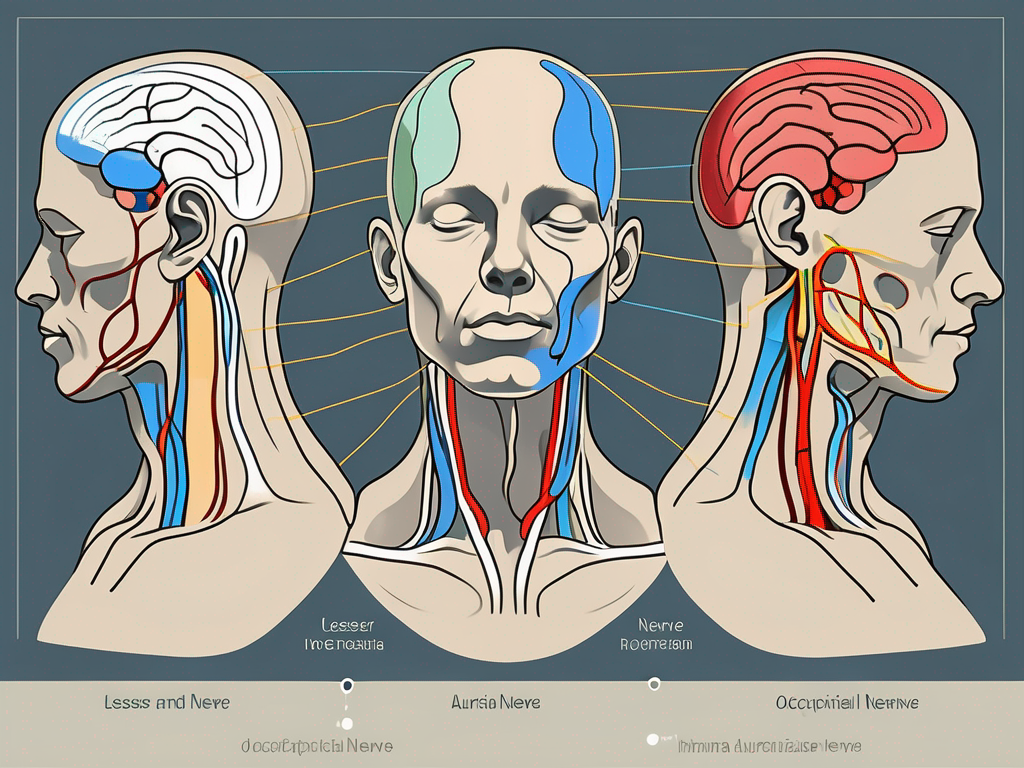
The human body is a complex structure, with numerous nerves responsible for various functions. Among these nerves are the greater and lesser occipital nerves and the auricular nerve. In this comprehensive guide, we aim to provide a thorough understanding of these important nerves, including their anatomy, function, common disorders, diagnostic techniques, and treatment options.
Anatomy of the Occipital and Auricular Nerves
The greater occipital nerve, also known as the GON, emerges from the spinal cord in the upper cervical region, specifically between the C1 and C2 vertebrae. It then ascends into the suboccipital region, where it selectively innervates the skin of the occiput and scalp. This nerve is a crucial component of the sensory system, responsible for transmitting various sensations from the back of the head to the brain.
On the other hand, the lesser occipital nerve, or LON, originates from the posterior rami of the second and third cervical nerves. It supplies sensation to the skin of the lateral and posterior regions of the scalp. Although smaller in size compared to the GON, the LON plays an equally important role in providing sensory input to specific areas of the scalp.
The auricular nerve, as the name suggests, is responsible for innervating the skin of the external ear. It arises from the cervical plexus, a network of nerves in the neck, and provides sensory input to the earlobe, external auditory canal, and surrounding areas. This nerve enables us to perceive sensations such as touch, temperature, and pain in this delicate area.
The Greater Occipital Nerve: Structure and Function
The GON is a major sensory nerve that carries information from the back of the head to the brain. It plays a crucial role in providing sensations such as pain, temperature, and touch from the occiput and scalp. Dysfunction or irritation of the GON can lead to a condition called occipital neuralgia, which can cause debilitating pain in the back of the head and neck area. This condition can significantly impact an individual’s quality of life, making it essential to understand the structure and function of the GON.
The GON consists of sensory fibers that originate from the upper cervical spinal cord. These fibers travel through the suboccipital region, branching out to innervate specific areas of the occiput and scalp. The nerve endings in the skin detect various stimuli, such as pressure, temperature, and pain, and transmit this information to the brain for interpretation.
In addition to its sensory function, the GON also plays a role in motor control. It is involved in the coordination of muscles in the suboccipital region, which are responsible for movements such as head rotation and extension. This dual role of the GON highlights its importance in both sensory perception and motor control.
The Lesser Occipital Nerve: Structure and Function
The LON, although smaller in size compared to the GON, is no less important. It supplies sensation to the lateral and posterior scalp regions. Irritation or injury to the LON can result in localized pain, tenderness, and sensitivity in these areas. Understanding the structure and function of the LON is crucial in diagnosing and managing conditions that affect this nerve.
The LON originates from the posterior rami of the second and third cervical nerves. It follows a course along the scalp, providing sensory innervation to specific regions. The nerve endings in the skin detect stimuli such as touch, pressure, and temperature, transmitting this information to the brain for processing.
In addition to its sensory function, the LON also plays a role in maintaining the integrity and health of the scalp. It helps regulate blood flow to the scalp, ensuring that the hair follicles receive adequate oxygen and nutrients for healthy hair growth. This dual role of the LON highlights its significance in both sensory perception and scalp health.
The Auricular Nerve: Structure and Function
The auricular nerve, as mentioned earlier, is responsible for innervating the skin of the external ear. It enables us to perceive sensations such as touch, temperature, and pain in this delicate area. Dysfunction of the auricular nerve can lead to auricular neuralgia, a condition characterized by sharp, shooting pain in the external ear.
The auricular nerve arises from the cervical plexus, a complex network of nerves in the neck. It follows a specific pathway to reach the external ear, branching out to provide sensory innervation to various areas. The nerve endings in the skin of the external ear detect stimuli and transmit this information to the brain for interpretation.
In addition to its sensory function, the auricular nerve also plays a role in maintaining the structural integrity of the external ear. It helps regulate blood flow to the ear, ensuring that the tissues receive adequate oxygen and nutrients for optimal function. This dual role of the auricular nerve highlights its importance in both sensory perception and ear health.
The Role of These Nerves in Sensory Perception
The greater and lesser occipital nerves, along with the auricular nerve, contribute significantly to our overall sensory perception. They allow us to feel touch, differentiate temperatures, and experience pain in specific areas of the head and ear region. Understanding the sensory functions of these nerves is crucial for diagnosing and managing disorders that affect them.
Sensory Functions of the Greater Occipital Nerve
The GON primarily carries sensory information from the occiput and scalp. It helps us perceive sensations such as gentle touch, pressure, and pain. Dysfunction of the GON can result in abnormal sensory experiences in these areas.
Sensory Functions of the Lesser Occipital Nerve
The LON plays a vital role in sensory perception of the lateral and posterior scalp regions. It allows us to perceive fine touch, temperature changes, and pain in these specific areas. Any disruption in the function of the LON can lead to sensory abnormalities that affect these regions.
Sensory Functions of the Auricular Nerve
The auricular nerve is responsible for transmitting sensory information from the external ear, including the earlobe and external auditory canal. It allows us to perceive touch, pressure, and pain in these delicate structures. Dysfunction of the auricular nerve can result in altered sensory experiences in the affected areas.
Common Disorders Affecting the Occipital and Auricular Nerves
Despite their importance, the greater and lesser occipital nerves and the auricular nerve are susceptible to various disorders. Familiarizing ourselves with these conditions is crucial for early diagnosis and appropriate management.
Occipital Neuralgia: Causes and Symptoms
- Occipital neuralgia is a condition characterized by severe, shooting pain in the back of the head and neck region.
- Common causes of occipital neuralgia include nerve irritation, compression, trauma, and inflammation.
- Symptoms of occipital neuralgia often include headache, scalp tenderness, and neck pain that radiates to the back of the head.
- It is essential to consult a healthcare professional for a thorough evaluation if you suspect occipital neuralgia.
Auricular Neuralgia: Causes and Symptoms
- Auricular neuralgia is a condition characterized by intense, stabbing pain in the external ear.
- Possible causes of auricular neuralgia include nerve compression, infection, trauma, or underlying medical conditions.
- Symptoms of auricular neuralgia often include severe ear pain, sensitivity to touch, and redness in the affected area.
- If you experience persistent ear pain, it is advisable to seek medical attention for an accurate diagnosis and appropriate treatment.
Diagnostic Techniques for Nerve Disorders
Accurately diagnosing nerve disorders affecting the greater and lesser occipital nerves and the auricular nerve requires specialized techniques and expertise.
Clinical Examination of the Occipital and Auricular Nerves
A comprehensive clinical examination is essential to assess the function and integrity of these nerves. This often involves evaluating sensory perception, assessing pain thresholds, and performing specific maneuvers to provoke or alleviate symptoms.
Imaging Techniques for Nerve Disorders
In cases where clinical examination alone is insufficient, imaging techniques such as MRI or CT scans may be necessary to visualize nerve anatomy and detect any underlying pathology or abnormalities.
Treatment Options for Occipital and Auricular Nerve Disorders
Treatment for disorders affecting the greater and lesser occipital nerves and the auricular nerve aims to alleviate symptoms and improve overall quality of life. It is important to note that treatment options may vary depending on the specific condition and individual patient factors.
Non-Surgical Treatments for Neuralgia
Non-surgical approaches are often the first line of treatment for neuralgia affecting these nerves. These may include:
- Medications: Pain relievers, anti-inflammatory drugs, and nerve medications may be prescribed to manage symptoms.
- Physical therapy: Techniques such as manual therapy, heat and cold therapy, and exercises may help alleviate pain and improve function.
- Nerve blocks: Injecting local anesthetics or steroids near the affected nerves can provide temporary relief from pain.
- Alternative therapies: Some individuals may find relief through techniques such as acupuncture, massage, or relaxation exercises. It is essential to discuss these options with a healthcare professional.
Surgical Treatments for Neuralgia
In cases where non-surgical treatments fail to provide adequate relief, surgical interventions may be considered. Surgical options may include nerve decompression, nerve resection, or nerve stimulation. It is imperative to consult with a healthcare professional to determine the most suitable treatment approach based on individual circumstances.
In conclusion, understanding the greater and lesser occipital nerves and the auricular nerve is essential for recognizing and managing various nerve disorders. While this guide provides valuable insights, it is crucial to consult with a healthcare professional for accurate diagnosis, appropriate treatment, and individualized care. With the right knowledge and expert guidance, we can work towards relieving pain and improving the overall well-being of those affected by these nerve conditions.
Leave a Reply