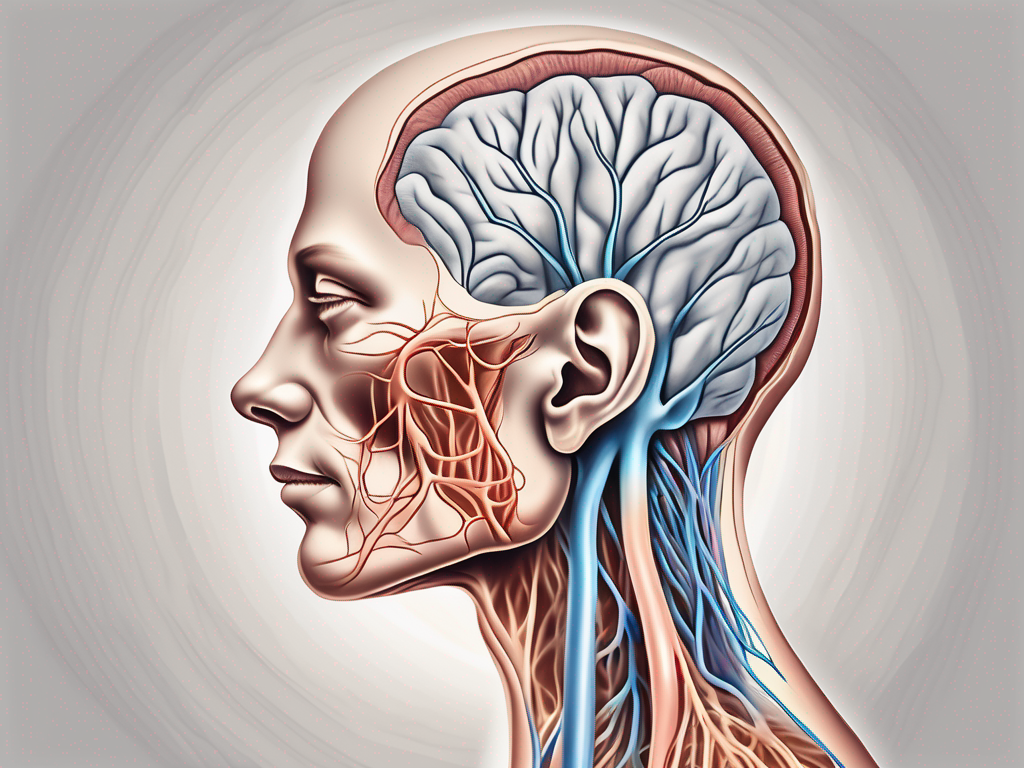
The posterior auricular nerve branch is a crucial component of the facial nerve, playing a significant role in facial nerve function. Understanding its anatomy, function, and relationship to facial paralysis can provide valuable insights into various aspects of facial expressions, sensory perception, surgical implications, and future research directions.
Understanding the Anatomy of the Posterior Auricular Nerve Branch
The posterior auricular nerve branch is a branch of the facial nerve that emerges from the main trunk just behind the ear. It courses through the posterior auricular region, supplying motor and sensory innervation to specific muscles and areas of the face. This branch is intricately connected to the functioning of the facial nerve and plays a vital role in several facial processes.
The posterior auricular nerve branch is a fascinating component of the facial nerve system. Its intricate pathway and connections make it a crucial player in the complex network of facial innervation. Let’s delve deeper into its connection with the facial nerve and explore its key components.
The Connection Between the Posterior Auricular Nerve and Facial Nerve
The posterior auricular nerve branch stems directly from the facial nerve, which is responsible for controlling the muscles of facial expression. The facial nerve, also known as cranial nerve VII, originates in the brainstem and travels through a series of intricate pathways before branching out to various regions of the face.
As an integral part of the facial nerve, any disruption or dysfunction in the posterior auricular nerve can impact the overall facial nerve function and result in various clinical manifestations. For example, damage to this branch may lead to weakness or paralysis of specific muscles, affecting facial expressions and potentially causing asymmetry.
Understanding the connection between the posterior auricular nerve and the facial nerve is crucial for diagnosing and treating conditions that involve facial nerve dysfunction. Medical professionals carefully evaluate the functioning of these nerve branches to pinpoint the exact location and nature of any abnormalities.
Key Components of the Posterior Auricular Nerve Branch
The posterior auricular nerve branch consists of motor and sensory components, each playing a unique role in the overall functioning of the facial nerve system.
The motor component supplies branches to the posterior belly of the digastric muscle and the stylohyoid muscle, contributing to the movement and functionality of these structures. The posterior belly of the digastric muscle is involved in the opening and closing of the mouth, while the stylohyoid muscle assists in swallowing and speech production.
These motor branches of the posterior auricular nerve are responsible for transmitting signals from the facial nerve to the targeted muscles, allowing for precise and coordinated movements. Dysfunction in these motor branches can lead to difficulties in performing everyday tasks such as chewing, speaking, and swallowing.
Additionally, the sensory component of the posterior auricular nerve provides sensory innervation to the skin behind the ear and the mastoid region. This sensory information is crucial for our perception of touch, temperature, and pain in these areas.
By transmitting sensory signals to the brain, the posterior auricular nerve allows us to feel sensations such as a gentle breeze against the skin or the pain of an ear infection. This sensory feedback is essential for our overall well-being and helps us navigate our surroundings safely.
In summary, the posterior auricular nerve branch is an integral part of the facial nerve system. Its connection to the facial nerve and its motor and sensory components make it a vital player in various facial processes. Understanding the anatomy and function of this nerve branch is crucial for medical professionals in diagnosing and treating conditions that involve facial nerve dysfunction.
The Function of the Posterior Auricular Nerve Branch
The posterior auricular nerve branch plays a critical role in several aspects of facial nerve function. Its functions can be broadly categorized into its impact on facial expressions and its influence on sensory perception.
The Role in Facial Expressions
The posterior auricular nerve branch contributes to numerous facial expressions by supplying motor innervation to the posterior belly of the digastric muscle and the stylohyoid muscle. These muscles play essential roles in activities such as swallowing, speaking, and facial movement, allowing for diverse and nuanced facial expressions that convey emotions and communicate with others.
For example, the posterior auricular nerve branch enables the movement of the posterior belly of the digastric muscle, which is responsible for lowering the mandible during activities like chewing and speaking. This muscle’s coordinated action with other facial muscles allows for precise control of facial movements, contributing to the wide range of expressions humans are capable of.
In addition, the stylohyoid muscle, innervated by the posterior auricular nerve branch, plays a crucial role in swallowing. This muscle helps elevate the hyoid bone during the swallowing process, facilitating the movement of food from the mouth to the esophagus. Without the proper innervation from the posterior auricular nerve branch, the function of the stylohyoid muscle would be compromised, leading to difficulties in swallowing and potentially impacting overall nutrition and health.
The Impact on Sensory Perception
In addition to motor function, the posterior auricular nerve branch also provides sensory innervation to the skin behind the ear and the mastoid region. This sensory input allows for the perception of touch, temperature, and pain in these areas. The proper functioning of the posterior auricular nerve branch is crucial for maintaining normal sensory perception in these regions.
When the skin behind the ear is touched, specialized nerve receptors in the area send signals through the posterior auricular nerve branch to the brain, allowing us to perceive the sensation of touch. Similarly, the nerve branch enables the perception of temperature changes, helping us detect whether the area is warm or cold. Additionally, the posterior auricular nerve branch plays a role in pain perception, allowing us to feel discomfort or pain in the mastoid region.
Furthermore, the sensory innervation provided by the posterior auricular nerve branch contributes to our spatial awareness and helps us maintain balance. The nerve branch receives information from the skin behind the ear and the mastoid region, which is then processed by the brain to provide feedback on our body’s position and movement in space. This feedback is crucial for activities such as maintaining balance while walking or engaging in physical activities.
The Relationship Between Posterior Auricular Nerve Branch and Facial Paralysis
Facial paralysis, characterized by the loss of voluntary muscle control in the face, can have a significant impact on an individual’s physical appearance, functionality, and mental well-being. The posterior auricular nerve branch is closely associated with facial paralysis and is involved in several related conditions.
The Influence on Bell’s Palsy
Bell’s Palsy is a condition characterized by sudden, temporary facial paralysis, often affecting one side of the face. Although the exact cause of Bell’s Palsy is unclear, it is believed to involve inflammation and compression of the facial nerve, including the posterior auricular nerve branch. The assessment and management of Bell’s Palsy often require medical intervention, and individuals experiencing facial paralysis should seek medical advice to identify the underlying cause and determine the appropriate treatment options.
The Effect on Ramsay Hunt Syndrome
Ramsay Hunt Syndrome is a viral infection that affects the facial nerve and can result in facial paralysis. The posterior auricular nerve branch is among the branches of the facial nerve that can be affected by this syndrome. Prompt medical evaluation and treatment are essential in cases of suspected Ramsay Hunt Syndrome to prevent further complications and optimize recovery.
The Surgical Implications of the Posterior Auricular Nerve Branch
The knowledge and understanding of the posterior auricular nerve branch have significant implications for various surgical procedures, particularly those involving the ear and the face. Surgical interventions in these areas require careful consideration of the posterior auricular nerve branch to preserve its function and minimize potential complications.
Considerations for Ear Surgery
When performing surgical procedures involving the ear, such as middle ear surgery or cochlear implantation, surgeons must be mindful of the location and course of the posterior auricular nerve branch. Awareness of its anatomical relationships can help prevent inadvertent damage and subsequent functional deficits.
Implications for Facial Plastic and Reconstructive Surgery
Facial plastic and reconstructive surgery aims to improve or restore the function and appearance of the face. The posterior auricular nerve branch plays a critical role in facial expressions and sensory perception, making it a vital consideration in surgical planning. Surgeons must carefully assess the potential impact of surgical interventions on the posterior auricular nerve branch and take appropriate measures to preserve its function.
Future Research Directions in Posterior Auricular Nerve Branch Studies
While significant progress has been made in understanding the role of the posterior auricular nerve branch, numerous avenues for future research exist. Exploring these areas can enhance our understanding of the nerve’s function and potentially lead to novel therapeutic approaches.
Potential Therapeutic Approaches
Further research into the posterior auricular nerve branch may uncover potential therapeutic approaches for various conditions involving facial nerve dysfunction. By investigating the nerve’s physiology, regenerative capabilities, and potential for targeted interventions, researchers may discover innovative methods to restore or enhance facial nerve function.
Unanswered Questions and Challenges
Despite advancements in our understanding of the posterior auricular nerve branch, many questions remain unanswered. Addressing these unresolved issues requires collaborative efforts among researchers, clinicians, and allied healthcare professionals. By overcoming the challenges associated with studying a complex anatomical and physiological structure, we can further expand our knowledge and improve patient outcomes.
In conclusion, the posterior auricular nerve branch plays a vital role in facial nerve function. Its thorough understanding and consideration in clinical practice, surgical interventions, and future research endeavors are paramount. Individuals experiencing facial paralysis or related conditions should consult with a medical professional to obtain accurate diagnosis, personalized treatment options, and appropriate medical advice for their specific situations.
Leave a Reply