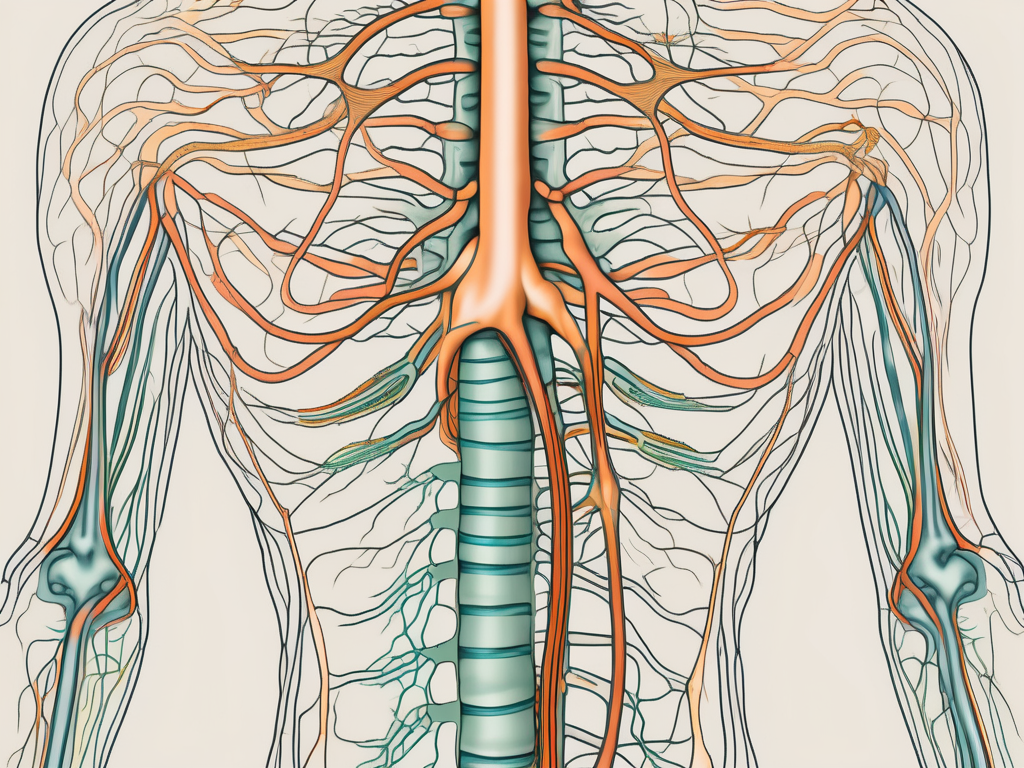
The Great Auricular Nerve is a fascinating structure with important functions in the human body. In this article, we will explore the origins, pathway, and clinical significance of this nerve, shedding light on its intricate workings. Understanding the Great Auricular Nerve can provide valuable insights into neurological medicine and potentially lead to advancements in diagnosing and treating related conditions.
Understanding the Great Auricular Nerve
The Great Auricular Nerve is a branch of the cervical plexus, a network of nerves originating from the upper spinal cord. This nerve emerges from the posterior triangle of the neck, specifically from the second and third cervical nerves.
The cervical plexus is a complex network of nerves that supplies motor and sensory innervation to various structures in the neck and head. It is responsible for controlling the movement of the neck muscles and providing sensation to the skin in these areas.
Within the cervical plexus, the Great Auricular Nerve stands out as a significant branch. It is named “Great” due to its extensive distribution and important role in sensory perception.
Anatomy of the Great Auricular Nerve
The Great Auricular Nerve courses through the posterior region of the ear, innervating the skin overlying the earlobe, parotid gland, and angle of the mandible. It receives sensory fibers from the sensory ganglia located within the cervical plexus.
The path of the Great Auricular Nerve can be traced along the posterior border of the sternocleidomastoid muscle, a large muscle in the neck that helps with head rotation and flexion. As it travels, the nerve sends out numerous branches that supply sensation to different areas.
One of the main branches of the Great Auricular Nerve extends towards the earlobe, providing sensation to this delicate structure. This allows us to feel touch, pressure, and even pain in this area.
Another branch of the Great Auricular Nerve extends towards the parotid gland, a salivary gland located in front of the ear. This branch provides sensory innervation to the skin overlying the gland, allowing us to perceive any changes or abnormalities in this region.
The final branch of the Great Auricular Nerve travels towards the angle of the mandible, the lower jawbone. This branch supplies sensation to the skin overlying this bony prominence, enabling us to sense touch and temperature in this area.
Function of the Great Auricular Nerve
The Great Auricular Nerve primarily functions as a sensory nerve, providing sensation to the areas it innervates. This includes the skin of the earlobe, parotid gland, and angle of the mandible. It plays a crucial role in transmitting touch, temperature, and pain sensations to the brain, allowing us to perceive and respond to our environment.
When the Great Auricular Nerve is stimulated, such as when we touch our earlobe or feel the warmth of the sun on our skin, it sends electrical signals to the brain. These signals are then processed and interpreted, allowing us to experience the sensation and respond accordingly.
In addition to its sensory function, the Great Auricular Nerve also plays a role in maintaining the overall health and integrity of the structures it innervates. It helps regulate blood flow to the skin, ensuring proper oxygenation and nutrient supply. It also aids in the healing process by promoting cellular repair and regeneration in case of injury or trauma.
Overall, the Great Auricular Nerve is a vital component of the cervical plexus and plays a crucial role in our daily lives. Its intricate anatomy and sensory function make it an essential part of our ability to perceive and interact with the world around us.
The Origins of the Great Auricular Nerve
The origins of the Great Auricular Nerve can be traced back to remarkable historical discoveries and ongoing genetic research.
Historical Discoveries and Research
Throughout history, anatomists and scientists have made significant contributions to our understanding of the Great Auricular Nerve. Early anatomical dissections revealed the presence of this nerve, laying the foundation for further investigations.
One of the earliest recorded mentions of the Great Auricular Nerve can be found in the works of the ancient Greek physician, Galen. Galen’s meticulous dissections of human cadavers in the 2nd century AD provided valuable insights into the structure and function of various nerves, including the Great Auricular Nerve. His detailed observations paved the way for future anatomists to delve deeper into the mysteries of this intricate nerve.
Fast forward to the Renaissance period, and we find another key figure in the study of the Great Auricular Nerve: Andreas Vesalius. Vesalius, a Flemish anatomist, revolutionized the field of anatomy with his groundbreaking work, “De Humani Corporis Fabrica.” In this seminal publication, Vesalius meticulously illustrated the human body, including the intricate network of nerves, including the Great Auricular Nerve. His detailed drawings and descriptions provided unprecedented clarity and accuracy, enabling subsequent generations of anatomists to build upon his findings.
As the field of medicine advanced, so did our understanding of the Great Auricular Nerve. In the 19th century, the advent of microscopes allowed for more detailed examinations of nerve tissues. Pioneering neurologists, such as Jean-Martin Charcot and Sir Charles Bell, made significant discoveries about the function and innervation of the Great Auricular Nerve. Their groundbreaking work laid the foundation for modern neurology and paved the way for further investigations into the origins and significance of this nerve.
Ongoing Genetic Research
Furthermore, recent advancements in genetic research have shed light on the role of genetics in nerve development. Studies have identified specific genes and signaling pathways involved in the formation and migration of nerves in the developing embryo. This research has deepened our understanding of the origins of the Great Auricular Nerve and how variations in genetic expression may contribute to nerve disorders.
Scientists have discovered that the development of the Great Auricular Nerve is orchestrated by a complex interplay of genes and molecular signals. Research has identified key genes, such as the Pax3 gene, which play a crucial role in the early development of the nerve. Mutations or alterations in these genes can lead to abnormalities in the formation or migration of the Great Auricular Nerve, resulting in various conditions, such as sensory deficits or neuropathic pain.
Moreover, studies have also explored the influence of environmental factors on the development of the Great Auricular Nerve. Researchers have investigated the effects of maternal nutrition, exposure to toxins, and other external factors on nerve development. These studies have highlighted the intricate interplay between genetic and environmental factors in shaping the origins of the Great Auricular Nerve.
As our understanding of genetics and developmental biology continues to advance, so too does our knowledge of the origins of the Great Auricular Nerve. Ongoing research aims to unravel the intricate mechanisms underlying nerve development, providing insights into potential therapeutic interventions for nerve disorders and paving the way for future breakthroughs in the field.
The Pathway of the Great Auricular Nerve
The pathway of the Great Auricular Nerve is an intricate network that connects various regions within the head and neck.
The Course of the Great Auricular Nerve
After originating from the cervical plexus, the Great Auricular Nerve ascends vertically along the posterior border of the sternocleidomastoid muscle, a prominent muscle in the neck. It then crosses the external carotid artery before branching into multiple smaller nerve fibers that collectively supply the skin of the ear, parotid gland, and angle of the mandible.
Connections and Interactions with Other Nerves
The Great Auricular Nerve interacts and communicates with various other nerves in its course. Notably, it receives contributions from the cervical plexus, as mentioned earlier. Additionally, it communicates with the facial nerve and trigeminal nerve, which are essential for facial expression and sensory input in the head and neck region.
Clinical Significance of the Great Auricular Nerve
The Great Auricular Nerve has clinical significance and can be associated with various disorders and conditions.
Common Disorders and Conditions
One common disorder involving the Great Auricular Nerve is called Great Auricular Neuralgia, a condition characterized by severe pain and hypersensitivity in the areas innervated by the nerve. It can be caused by nerve compression, trauma, or other underlying medical conditions. If you experience persistent pain or discomfort in these regions, it is important to consult a medical professional for proper evaluation and management.
Diagnostic Techniques and Treatments
Medical professionals employ various diagnostic techniques to assess the function and integrity of the Great Auricular Nerve. These may include physical examinations, nerve conduction studies, imaging scans, and, in some cases, biopsies. Treatment options range from conservative approaches such as medications and physical therapy to more invasive procedures like nerve blocks or surgical interventions. However, treatment decisions should be tailored to individual needs and always made under the guidance of a healthcare professional.
Future Research Directions
Ongoing research into the Great Auricular Nerve holds promising potential for uncovering more about its mysterious origins and exploring new avenues for diagnosis, treatment, and potential implications in neurological medicine.
Unanswered Questions about the Great Auricular Nerve
Despite much progress, there are still unanswered questions surrounding the Great Auricular Nerve. Researchers continue to investigate the specific genetic and molecular mechanisms that contribute to its development and function. Additionally, further research may unveil unknown interactions between the Great Auricular Nerve and other nerves within the head and neck region.
Potential Implications for Neurological Medicine
Advancements in our understanding of the Great Auricular Nerve may have far-reaching implications in the field of neurological medicine. By unraveling the complexities of this nerve, we may gain insights into the pathogenesis of nerve disorders, develop targeted therapies, and improve patient outcomes. However, more research is needed to fully harness the potential of the Great Auricular Nerve in the clinical setting.
In conclusion, the Great Auricular Nerve is a remarkable structure with intriguing origins and crucial functions in our bodies. Its pathway connects various regions within the head and neck, making it an integral part of our sensory perception. The clinical significance of this nerve cannot be overlooked, and ongoing research may pave the way for further advancements in neurological medicine. If you have any concerns or questions about the Great Auricular Nerve or related conditions, it is always advisable to consult with a healthcare professional for comprehensive evaluation and appropriate management.
Leave a Reply