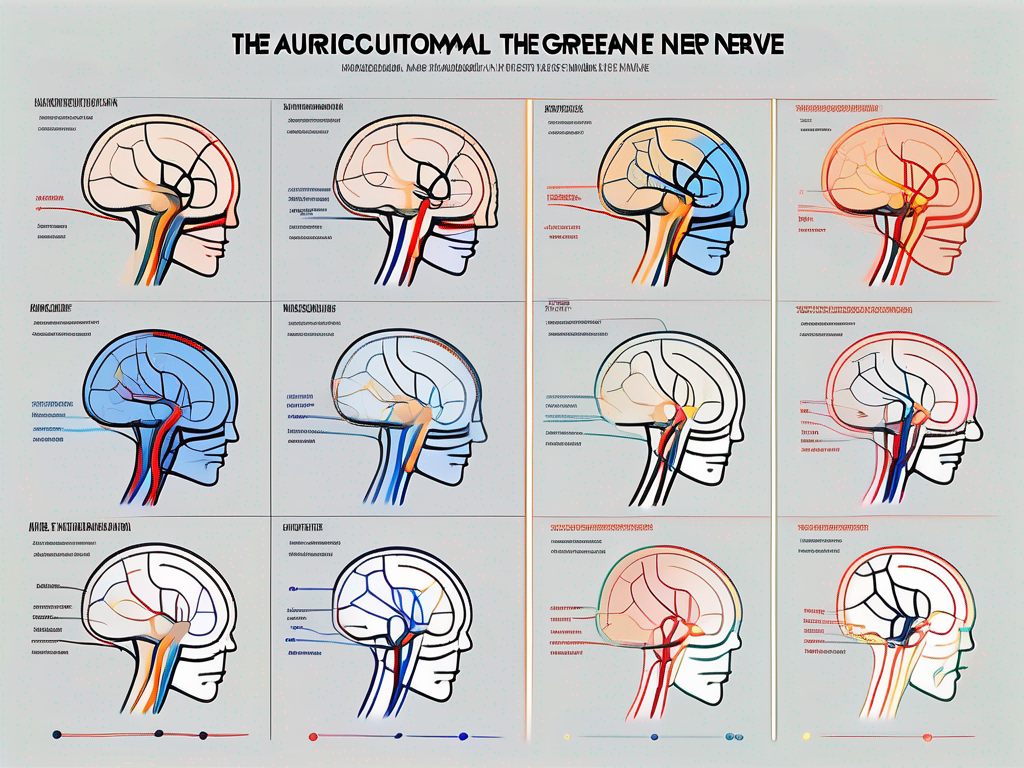
The human body is a complex and intricate organism, with numerous systems working in harmony to maintain optimal health. One such system is the nervous system, which plays a crucial role in transmitting messages and signals throughout the body. Within the vast network of nerves, the auriculotemporal nerve and the great auricular nerve are two important components that deserve our attention. In this article, we will delve into the details of these nerves, exploring their anatomy, functions, and any associated disorders. By the end, you will have a comprehensive understanding of the similarities and differences between the auriculotemporal nerve and the great auricular nerve.
Understanding the Nervous System
The nervous system is a complex network of nerves, cells, and tissues that helps in the coordination and regulation of bodily functions. It is divided into two main parts – the central nervous system (CNS) and the peripheral nervous system (PNS). While the CNS includes the brain and spinal cord, the PNS consists of all other nerves that extend beyond the CNS.
The central nervous system, comprising the brain and spinal cord, is the control center of the entire body. It receives and processes information from the sensory organs and sends out signals to initiate appropriate responses. The brain, with its billions of neurons, is responsible for higher cognitive functions, such as thinking, memory, and emotions. The spinal cord acts as a communication pathway between the brain and the rest of the body, relaying signals to and from various body parts.
The peripheral nervous system, on the other hand, consists of nerves that connect the CNS to the limbs, organs, and other body parts. These nerves are like electrical cables, transmitting signals to and from the brain. They are responsible for the coordination of voluntary movements, such as walking or picking up objects, as well as involuntary actions, like the beating of the heart or digestion.
The Role of Nerves in the Human Body
Nerves are the building blocks of the peripheral nervous system and are responsible for transmitting signals between the brain and different parts of the body. These signals control various actions and sensations, such as movement, touch, temperature, and pain.
For example, when you touch a hot stove, sensory nerves in your skin detect the heat and send a signal to your brain. In response, your brain sends a message back through motor nerves, instructing your muscles to pull your hand away. This rapid communication between the nerves and the brain allows for quick reflex actions to protect the body from harm.
Key Components of the Nervous System
Within the peripheral nervous system, the auriculotemporal nerve and the great auricular nerve are two distinct nerves that serve unique functions.
The auriculotemporal nerve is a branch of the trigeminal nerve, which is responsible for transmitting sensory information from the skin of the temple, the external ear, and the temporomandibular joint. It plays a crucial role in facial sensation and is involved in conditions like temporomandibular joint disorder (TMJ) and trigeminal neuralgia.
The great auricular nerve, on the other hand, is a branch of the cervical plexus and provides sensory innervation to the skin over the angle of the mandible and the external ear. It is commonly used in reconstructive surgeries and nerve grafts due to its accessibility and predictable anatomy.
Understanding the functions and components of the nervous system is essential in comprehending the intricate workings of the human body. From the coordination of simple movements to the complex processes of thought and emotion, the nervous system is truly remarkable in its ability to regulate and control our every action.
Introduction to Auriculotemporal Nerve
The auriculotemporal nerve is a branch of the trigeminal nerve, which originates from the brainstem. It travels through the skull and reaches the outside of the ear. From there, it branches out, supplying sensory innervation to the temporal region of the scalp, external ear, and the temporomandibular joint.
The auriculotemporal nerve is a fascinating component of the trigeminal nerve system. It plays a crucial role in providing sensory information from various areas of the head, allowing us to perceive touch, pain, and temperature in these regions. Let’s explore the anatomy and functions of this nerve in more detail.
Anatomy of the Auriculotemporal Nerve
The auriculotemporal nerve arises from the mandibular branch of the trigeminal nerve, specifically the posterior division. It passes behind the neck of the mandible and enters the parotid gland. Inside the gland, it divides into multiple branches, which supply the aforementioned areas.
The intricate anatomy of the auriculotemporal nerve is a marvel of nature. As it courses through the parotid gland, it undergoes further branching, forming an intricate network of nerve fibers. This branching pattern ensures that the sensory information from the temporal region, external ear, and temporomandibular joint is efficiently transmitted to the brain for processing.
Functions of the Auriculotemporal Nerve
The primary function of the auriculotemporal nerve is to provide sensation to the temporal region of the scalp, external ear, and the temporomandibular joint. It carries signals related to touch, pain, and temperature from these areas back to the brain.
Imagine the sensation of a gentle breeze on your scalp or the warmth of the sun on your ear. These sensations are made possible by the auriculotemporal nerve, which acts as a conduit for sensory information. Additionally, this nerve plays a crucial role in our ability to chew and move our jaws, as it provides sensory feedback from the temporomandibular joint.
Disorders Related to the Auriculotemporal Nerve
There are instances where the auriculotemporal nerve can become affected, leading to certain disorders. For example, temporomandibular joint disorder (TMD) may cause pain and dysfunction in the jaw joint, potentially involving the auriculotemporal nerve. It is important to note that if you experience any symptoms or suspect any issues related to this nerve, it is advisable to consult with a healthcare professional for an accurate diagnosis and appropriate treatment.
Disorders affecting the auriculotemporal nerve can have a significant impact on an individual’s quality of life. Pain and dysfunction in the temporomandibular joint can make it difficult to eat, speak, or even open the mouth comfortably. Seeking proper medical attention and treatment is crucial to managing these conditions effectively and restoring normal function.
In conclusion, the auriculotemporal nerve is a vital component of the trigeminal nerve system, responsible for providing sensory innervation to the temporal region of the scalp, external ear, and the temporomandibular joint. Its intricate anatomy and functions highlight the complexity of our nervous system and its role in our daily lives. Understanding the auriculotemporal nerve can help us appreciate the wonders of our own bodies and seek appropriate care when necessary.
Introduction to Great Auricular Nerve
The great auricular nerve is a branch of the cervical plexus, which originates from the spinal cord. It emerges from the posterior border of the sternocleidomastoid muscle in the neck and ascends towards the ear and parotid gland.
Anatomy of the Great Auricular Nerve
The great auricular nerve is composed of sensory fibers from the second and third cervical nerves. It follows a superficial course, passing over the sternocleidomastoid muscle and giving off branches that supply the skin over the ear, angle of the jaw, and parotid region.
Functions of the Great Auricular Nerve
The great auricular nerve primarily carries sensory information from the skin over the ear, angle of the jaw, and parotid region. It enables the perception of touch, temperature, and pain in these areas.
Disorders Related to the Great Auricular Nerve
If the great auricular nerve becomes compressed or damaged, it can result in disorders such as neuralgia or neuropathy. These conditions may cause symptoms such as pain, numbness, or tingling in the affected areas. If you experience any of these symptoms or have concerns about the great auricular nerve, it is important to seek professional medical advice for proper evaluation and treatment.
Comparing the Auriculotemporal and Great Auricular Nerves
While the auriculotemporal and great auricular nerves have distinct anatomical origins and pathways, they share some similarities in terms of function and distribution.
Similarities Between the Two Nerves
Both the auriculotemporal nerve and the great auricular nerve are sensory in nature. They provide innervation to specific regions of the head and neck, allowing for the perception of touch, pain, and temperature.
Differences in Anatomy and Function
Despite their similarities, there are notable differences between these nerves. The auriculotemporal nerve arises from the trigeminal nerve and supplies the temporal region of the scalp, external ear, and temporomandibular joint. On the other hand, the great auricular nerve originates from the cervical plexus and provides sensation to the skin over the ear, angle of the jaw, and parotid region.
Comparative Analysis of Disorders
In terms of disorders, both nerves can be affected by various conditions. However, the specific disorders associated with each nerve may differ. While TMD is a known disorder that may involve the auriculotemporal nerve, neuralgia or neuropathy may affect the great auricular nerve. It is essential to consult with a healthcare provider for appropriate diagnosis and management of any related conditions.
By understanding the fascinating nuances of the auriculotemporal nerve and the great auricular nerve, we gain insights into the intricate workings of the human body. While this article provides valuable information, remember that any concerns or symptoms should always be addressed by seeking professional medical guidance. Consulting with a qualified healthcare professional will ensure accurate diagnosis and appropriate treatment, leading to improved overall health and well-being.
Leave a Reply